Marketing is changing faster than ever. AI tools have entered every part of the marketing process—content, SEO, social media, and even strategy. With this shift, marketers need a new core skill to stay valuable: prompt engineering.
Prompt Engineering for Marketers is not technical or complex. It simply means learning how to work with AI in a way that produces clear, accurate, and useful outputs.
As more marketing teams adopt AI tools, the ability to guide these tools has become essential.
Let’s explore why prompt engineering is the one skill every marketer should learn now, and how it will help you grow and adapt in the coming years.
Prompt Engineering for Marketers: The One Skill That Will Future-Proof Your Career
Prompt engineering in marketing means communicating with AI tools in a structured and thoughtful way.
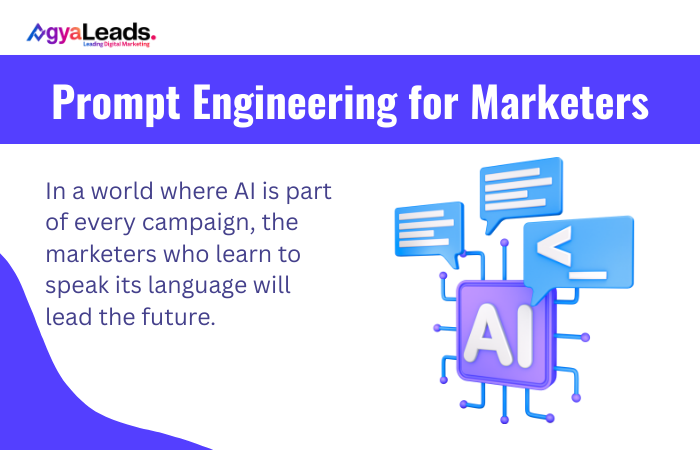
Instead of clicking buttons and hoping for the right result, marketers can now give instructions to AI that are aligned with their goals—whether that’s writing blog content, planning an email campaign, or analyzing customer data.
It’s a skill that blends creativity, logic, and business understanding. When used correctly, prompt engineering allows marketers to get high-quality results in less time, with more control over brand voice, tone, and audience focus.
Why Prompt Engineering Matters for Marketers?
AI is now a part of nearly every marketing workflow. But AI is not human—it doesn’t automatically know your audience, campaign goals, or style preferences.
It relies on what you tell it. If your instruction is unclear, the output will be unclear. If it’s thoughtful and specific, the output will reflect that.
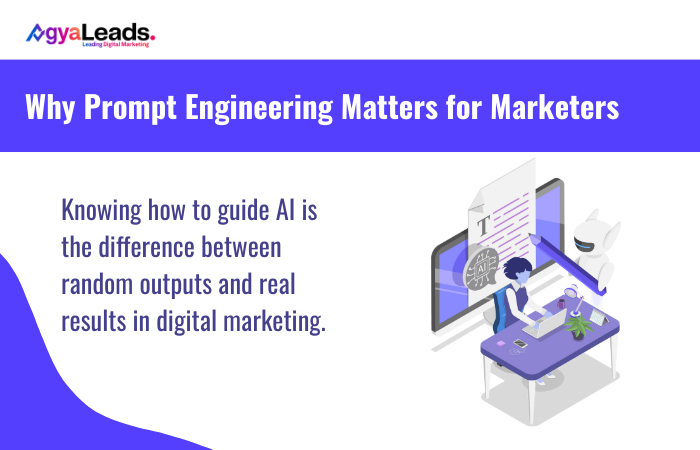
This is where prompt engineering becomes crucial. It bridges the gap between what you need and what AI can deliver. It helps you keep your messaging consistent, your strategy sharp, and your content valuable.
As AI adoption continues, marketers who can guide AI effectively will lead campaigns, while those who can’t may fall behind. That’s why this skill isn’t just useful—it’s future-proof.
How Prompt Engineering Fits into Day-to-Day Marketing
Prompt engineering doesn’t sit outside your current tasks. It fits into the daily tools and strategies you already use. It simply changes how you approach them, making your work faster and smarter.
In Content Creation
Whether you’re creating a blog, a newsletter, or website content, prompt engineering helps ensure that the AI-generated content aligns with your goals.
It gives you more control over structure, tone, and relevance—so you spend less time editing and more time optimizing.
It also supports faster content scaling, helping you publish more consistently while maintaining brand quality.
AI content tools can help marketers write faster, generate ideas, and save time—but the human touch in blog creation is still irreplaceable.
In Paid Advertising and Copywriting
Short-form copy like ads or headlines needs to be clear, persuasive, and platform-specific. Prompt engineering allows marketers to guide AI toward specific messaging goals—so the result matches the product, the platform, and the audience.
It also supports testing and variation, so teams can try multiple directions quickly and select the best-performing version.
In Social Media Management
Social media teams use AI tools to create captions, plan campaigns, and experiment with messaging. When guided well, AI can support tone, brand values, and audience alignment.
Prompt engineering ensures that your posts feel human and relevant—even when created at scale.
Skills Marketers Should Build Around Prompt Engineering
You don’t need a technical background to learn prompt engineering. But a few mindset shifts and habits can help you master it quickly.
Clarity and Simplicity
The clearer your thinking, the better your results. Marketers should get used to breaking down their needs in simple, direct terms.
This helps AI tools better understand what you’re aiming for—and helps you clarify your own marketing strategy in the process.
Audience Awareness
Always keep your audience in mind. AI is a tool, but you still need to define who you’re speaking to, what they care about, and what kind of language resonates with them.
Prompt engineering works best when paired with strong audience understanding.
Tone and Style Consistency
Whether your brand is formal, casual, witty, or bold—AI won’t automatically know that. The more clearly you learn to preserve and instruct tone, the more consistent your output will be.
Marketers with strong brand voice awareness are naturally stronger prompt engineers.
Iterative Thinking
Prompt engineering is not one-and-done. It’s a process of refining instructions and improving the output.
If something feels off, you don’t abandon the tool—you learn to adjust the input. This mindset helps marketers make the most of any AI platform.
Read More:
Is Your AI Marketing Alienating Your Audience?
Frameworks That Help Marketers Use AI Better
Marketers who succeed with AI tend to follow certain mental models. While everyone has their own approach, some basic frameworks help shape effective thinking.
One common structure is to define the purpose, the audience, the type of output needed, and any format or tone expectations. By staying organized in your thinking, you guide AI with more accuracy.
Some marketers also maintain a library of reusable instructions or prompt outlines for repeated tasks like newsletters, campaign briefs, or content calendars.
This approach speeds up workflows and keeps messaging consistent.
Mistakes to Avoid When Using AI in Marketing
Even experienced marketers make errors when using AI. Understanding common mistakes can help you avoid them and get better results.
One mistake is giving too little information. If AI doesn’t know who the content is for or what it’s trying to achieve, the result will be vague.
Another is doing too much at once—asking for a mix of formats or audiences in one task can confuse the output.
Another mistake is assuming AI knows your business. It doesn’t. You have to guide it with clear context. Finally, never skip reviewing AI-generated content. It’s a tool—not a replacement for human oversight.
How Prompt Engineering Supports Traditional Marketing Skills
This skill doesn’t replace what you already know—it enhances it. Your creativity, strategy, and audience insight are still the foundation.
Prompt engineering simply allows you to use those strengths more efficiently by working alongside AI.
For example, a content strategist still needs to plan the funnel and messaging. But with prompt engineering, they can generate supporting assets faster. A brand manager still owns the voice, but AI can help test variations or scale messaging when guided well.
This makes you not just faster—but more effective.
Why Prompt Engineering Makes You Future-Ready
In every industry, AI is becoming part of standard work processes. In marketing, it’s especially true. From writing and analytics to planning and execution, AI tools are everywhere—and growing smarter every day.
Marketers who can work with AI, not against it, will stay ahead of these changes. Prompt engineering is the skill that helps you do exactly that.
It future-proofs your career by making you more efficient, creative, and adaptable.
It also makes you more valuable on teams that are already using AI—or plan to. As marketing becomes more data-driven and content-heavy, this skill will be seen as a core requirement rather than a bonus.
Where Prompt Engineering Is Being Used
You can already find prompt engineering being used in:
- AI content tools that support blogs, social captions, and ad copy
- SEO platforms that analyze search intent or build outlines
- Campaign tools that auto-generate emails or landing page drafts
- Strategy dashboards that summarize customer feedback or behavior patterns
In all these areas, results improve when marketers guide the tools correctly. That’s what makes prompt engineering useful across channels.
Who Should Learn Prompt Engineering?
This is not just for writers or tech-savvy marketers. It’s helpful for:
- Content marketers who want to scale and refine messaging
- SEO specialists who need to build content plans and clusters faster
- Paid ad managers creating headline variations and testing ideas
- Brand marketers managing tone, identity, and audience connection
- Startup teams doing everything from scratch and wearing multiple hats
In fact, anyone involved in planning, creating, or measuring marketing content can benefit.
The Future of AI and Prompt-Driven Marketing
As marketing evolves, we’re likely to see prompt engineering become a default part of every marketer’s toolkit.
More platforms will include prompt templates. More job roles will expect familiarity with AI-powered tools.
We may even see the rise of dedicated roles focused on prompt writing and AI content coordination. That means the skill you build now could open up new paths in your marketing career later.
Final Thoughts
Prompt engineering for marketers is not about being technical—it’s about being thoughtful. It’s about understanding your message, your audience, and your tools well enough to guide AI in the right direction.
This one skill will future-proof your marketing career by helping you work faster, stay relevant, and lead in a world where AI is part of the team.
Whether you’re in content, ads, or brand strategy, prompt engineering will help you adapt, grow, and succeed—now and in the future.
As AI continues to grow in marketing, learning prompt engineering is no longer optional. It’s the smart move for every marketer who wants to stay ahead.
FAQs
What is prompt engineering for marketers?
Prompt engineering for marketers means guiding AI tools with clear, structured instructions to get accurate and useful marketing outputs. It helps marketers improve content quality, SEO planning, ad copy, and strategy by combining human intent with AI capabilities in a controlled, goal‑focused way.
Why is prompt engineering important for digital marketing?
Prompt engineering is important because AI tools depend on instructions to perform well. When marketers use prompt engineering correctly, they get more relevant content, better alignment with brand voice, and faster execution. This makes marketing workflows more efficient without losing creativity or strategic control.
Is prompt engineering a technical skill marketers need coding for?
No, prompt engineering is not a coding skill. It is a communication and thinking skill. Marketers only need to understand how to clearly explain goals, audience, and expectations to AI tools. Strong marketing fundamentals and clarity matter more than technical knowledge.
How does prompt engineering help in content marketing?
Prompt engineering helps content marketers create structured, relevant, and audience‑focused content faster. It supports blog creation, content planning, SEO alignment, and repurposing. When guided by human judgment, AI outputs become more readable, engaging, and aligned with real user intent.
Does prompt engineering replace human writers or marketers?
No, prompt engineering does not replace human marketers. It enhances their work. AI can assist with speed and structure, but human insight is essential for storytelling, emotional connection, brand voice, and accuracy. The best results come from human‑guided AI, not automation alone.