
AI-powered personalized customer journeys are changing the way businesses connect with their customers. Instead of showing the same message to everyone, brands can now create experiences that feel relevant, timely, and personal for each individual.
This shift is not about fancy technology alone. It is about understanding people better and guiding them through a journey that actually matches their needs, intent, and behavior.
At Agyaleads this approach is seen as a practical growth strategy. When customer journeys are powered by AI, businesses move away from guesswork and start building meaningful, data-driven relationships that grow stronger over time.
This article explains AI-powered personalized customer journeys in simple words, with clear examples, so readers can understand how they work, why they matter, and how they can be applied in real business situations.
AI-Powered Personalized Customer Journeys: The AI Advantage
For a long time, customer journeys were built in a fixed way. A user would see the same website, get the same emails, and receive the same offers as thousands of others.
These generic journeys were easy to manage, but they often failed to connect with real customer intent.
AI-powered personalized customer journeys change this approach completely. Instead of treating all users the same, AI studies how each person interacts with a brand.
It looks at what they read, what they click, how often they return, and where they drop off.
For example, if one visitor spends time reading blog content while another checks pricing pages, AI understands that their intent is different.
The first user may need education and trust-building, while the second may be closer to a buying decision. Personalization allows the journey to adapt to both users in a natural way.
What Makes a Customer Journey Truly AI-Powered
Not every automated journey is powered by AI. Many systems still rely on fixed rules such as sending an email after a form fill or showing an ad after a page visit. While useful, these are not intelligent journeys.
A truly AI-powered customer journey learns and improves over time. It uses machine learning to understand patterns and predict what a customer might need next. Instead of following a rigid path, the journey adjusts itself automatically.
For instance, if AI notices that users who watch a demo video usually convert after reading a case study, it can prioritize that content for similar users.
This ability to learn and adapt is what makes AI-driven customer journey personalization so powerful.
Why AI-Powered Personalized Customer Journeys Matter Today
Customer expectations have changed rapidly. People now expect brands to recognize them, remember their preferences, and communicate in a relevant way across all touchpoints.
AI-powered personalized customer journeys help meet these expectations by creating consistency and relevance. Whether a customer interacts through a website, email, or ad, the experience feels connected.
From a business point of view, this leads to better engagement, higher conversion rates, and stronger customer loyalty.
When customers feel understood, they are more likely to trust the brand and stay connected over the long term.
The Role of Data in AI Customer Journey Personalization
Data is the foundation of any AI-powered customer experience. However, the goal is not to collect as much data as possible, but to use the right data in a meaningful way.
AI analyzes behavioral data such as page visits, time spent, clicks, downloads, and repeat visits. Over time, this creates a dynamic customer profile that changes as the user’s behavior changes.
For example, a returning visitor who previously explored beginner content but now checks advanced features shows clear progress in their journey. AI can respond by adjusting the messaging and offering more relevant next steps.
This data-driven customer journey approach ensures personalization stays helpful instead of overwhelming.
Understanding Customer Intent Through Real-Time Personalization
Customer intent is not fixed. It changes based on context, timing, and needs. One of the biggest strengths of AI-powered personalized customer journeys is the ability to respond in real time.
If a user shows interest but hesitates to take action, AI can adjust the journey by offering reassurance instead of pushing sales messages.
If someone becomes inactive, the system can recognize disengagement early and trigger a re-engagement strategy.
For example, an online service platform might notice that a user visits the pricing page multiple times but does not sign up. Instead of sending a discount immediately, AI may first share a helpful guide explaining the value of the service.
This shows how real-time customer personalization respects intent and builds trust.
Creating Smarter Omnichannel Customer Experiences
Modern customers move between multiple channels. They may discover a brand through social media, explore the website on mobile, and later receive emails on a desktop. Without AI, these touchpoints often feel disconnected.
AI-powered personalized customer journeys connect these interactions into a single experience. Actions taken on one channel influence what happens on another.
For instance, if a user downloads a guide from a website, AI can ensure follow-up emails match that topic instead of sending unrelated promotions.
This omnichannel personalization helps customers feel seen and supported rather than confused.
Predictive Personalization and Future Behavior
AI does not only look at what has already happened. It also predicts what might happen next.
Predictive personalization uses machine learning to identify patterns in customer behavior. It can estimate the likelihood of conversion, churn, or deeper engagement.
For example, if AI identifies that users who stop opening emails for a certain period often leave completely, it can trigger timely interventions. This might include helpful content, surveys, or personalized messages aimed at re-building interest.
By acting early, businesses can guide customers instead of reacting too late. This makes AI-driven customer journey optimization a proactive strategy rather than a reactive one.
Keeping the Human Touch in AI-Powered Journeys
A common concern is that AI-powered journeys may feel cold or mechanical. In reality, the opposite is often true when personalization is done well.
AI handles analysis and timing, while humans focus on empathy, creativity, and clarity. The result is communication that feels more human because it is relevant and respectful.
For example, instead of sending frequent promotional emails, AI may reduce communication when a customer shows signs of fatigue. This balance helps maintain trust and prevents personalization from becoming intrusive.
At Agya Leads, AI is seen as a tool that supports human understanding, not replaces it.
Measuring Success Beyond Clicks and Conversions
Measuring AI-powered personalized customer journeys requires looking beyond surface-level metrics. While conversions matter, they do not tell the full story.
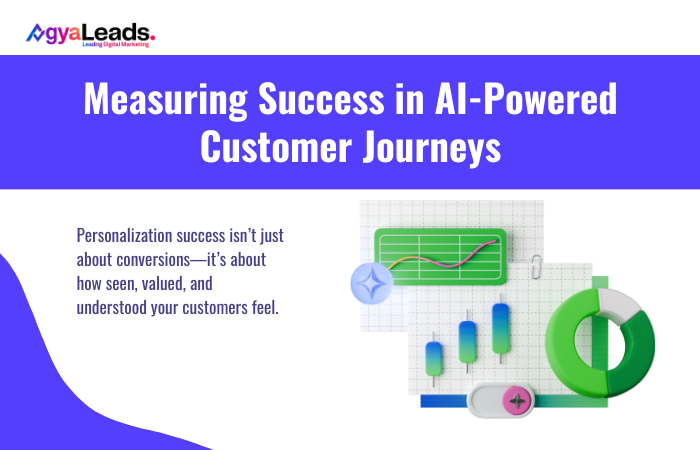
Engagement quality, repeat visits, time spent, customer satisfaction, and lifetime value provide deeper insight. AI can also highlight which journey paths perform best and where users experience friction.
For example, if many users drop off at a specific step, AI can help identify whether the issue is messaging, timing, or complexity. This allows continuous improvement based on real behavior.
Common Mistakes in AI Customer Journey Personalization
Despite its benefits, AI-powered personalization can fail if implemented without care.
One common mistake is over-personalization, where users feel watched rather than supported. Another issue is relying on poor or incomplete data, which leads to inaccurate predictions.
It is also important to remember that AI-powered customer journeys are not a one-time setup. They require ongoing testing, learning, and refinement to stay effective.
How to Build AI-Powered Personalized Customer Journeys Strategically
Building effective AI-powered personalized customer journeys starts with understanding the customer, not the technology.
Businesses should first map customer goals, pain points, and decision stages. AI can then be applied to improve specific parts of the journey, such as onboarding, engagement, or retention.
For example, instead of personalizing everything at once, a company might start by improving onboarding emails using behavioral data. As results improve, personalization can expand to other areas.
This gradual approach ensures AI-driven personalization remains focused, useful, and aligned with business goals.
The Future of AI-Powered Personalized Customer Journeys
AI-powered personalized customer journeys will continue to evolve as technology becomes more advanced. Journeys will become more context-aware, predictive, and adaptive.
In the future, personalization will feel less like marketing and more like meaningful interaction. Brands that invest early in intelligent customer journey design will build stronger relationships and long-term loyalty.
For businesses working with Agyaleads / Agya Leads, AI-powered personalized customer journeys represent a sustainable path toward smarter engagement and consistent growth.
Conclusion
AI-powered personalized customer journeys help businesses move away from generic experiences and toward intelligent, human-centered engagement.
By using AI-driven customer journey personalization, brands can understand intent, respond in real time, and guide customers with relevance and care.
When built thoughtfully, these journeys improve customer experience, strengthen trust, and support long-term success.
AI-powered personalized customer journeys are not just a trend. They are the foundation of modern, data-driven customer relationships that continue to evolve with changing needs.
FAQs
What are AI-powered personalized customer journeys?
AI-powered personalized customer journeys use artificial intelligence to create customized experiences for each customer. Instead of treating everyone the same, AI adapts messages, timing, and content based on user behavior, preferences, and intent—helping brands build stronger relationships.
How does AI improve customer journey personalization?
AI improves customer journeys by analyzing data in real time, predicting user needs, and adjusting content or offers accordingly. It makes every step more relevant by learning from past behavior and guiding customers toward the right actions—like purchases or signups.
Why is personalization important in marketing?
Personalization helps brands connect with people in a more human way. When messages feel tailored, customers are more likely to engage, trust the brand, and take action. It boosts conversion rates, loyalty, and overall satisfaction with the experience.
Can small businesses use AI-powered personalization?
Yes, small businesses can use AI tools to personalize customer journeys. Many platforms offer user-friendly AI features for email marketing, website recommendations, and chatbots. It helps smaller brands compete with larger ones by improving customer engagement and experience.
How does real-time personalization work?
Real-time personalization uses AI to instantly adapt the experience based on what a user is doing now. For example, if someone abandons a cart, AI can trigger a helpful popup or a follow-up message within minutes to encourage them to return.
Is AI personalization safe for customer privacy?
Yes, when used responsibly. AI tools follow data privacy laws like GDPR and only use data that users have shared or agreed to. Businesses must ensure transparency and give users control over how their data is used for personalization.
How do AI-powered journeys help with customer retention?
AI identifies when customers might drop off and takes action—like offering help, reminders, or loyalty rewards. It keeps users engaged with relevant experiences, making them feel valued and more likely to return and stay loyal.
Does AI work across different marketing channels?
Yes, AI can personalize journeys across websites, mobile apps, email campaigns, social media, and even SMS. It helps ensure a smooth and connected experience, no matter where the customer interacts with your brand.
Are there risks in using AI for personalization?
While powerful, AI needs quality data to work well. Poor data can lead to irrelevant suggestions. Also, over-personalization may feel intrusive. It’s important to find the right balance and stay transparent about how data is used.